
Art as Environment
- by Kirill
- in Public Art
- posted September 11, 2026
Exploring the relationship between painting, scale and space.
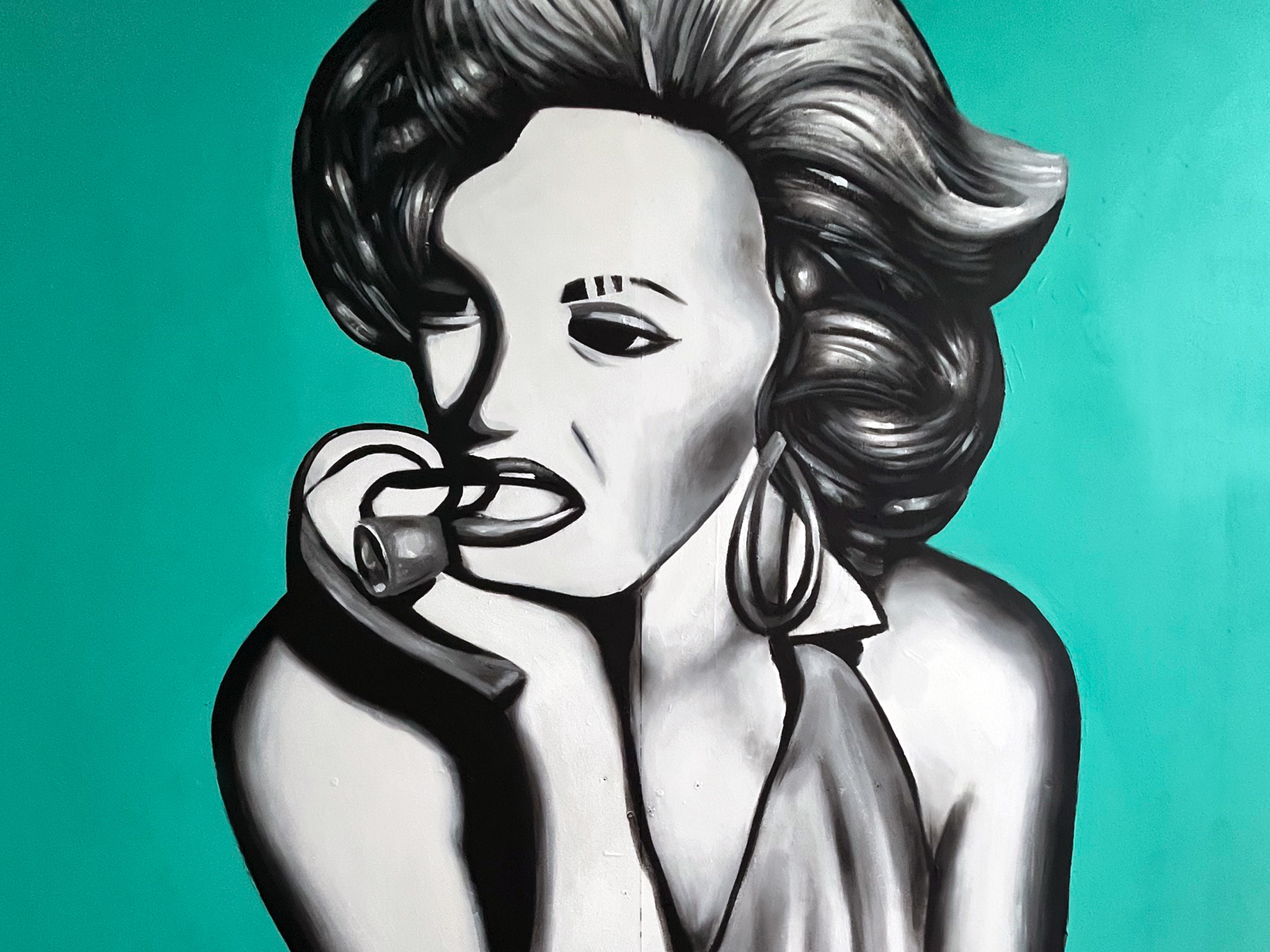
I recently completed this large-scale residential commission for a client’s home. The idea was to create something that didn’t simply hang on the wall, but became part of the space itself.
The piece began with a simple graphic drawing. I wanted to keep the composition bold and immediate, using a limited palette of black, white and gray against a strong turquoise background.
As the painting developed, I began adding more depth to the figure while keeping the graphic quality of the original drawing. The contrast between the monochromatic figure and saturated background allows the piece to command the room without becoming overly complicated.
Working at this scale changes the way I approach an image. You’re no longer thinking only about the composition inside a canvas. You’re considering the architecture, viewing distance, surrounding furniture, light and how someone experiences the work as they move through the room.
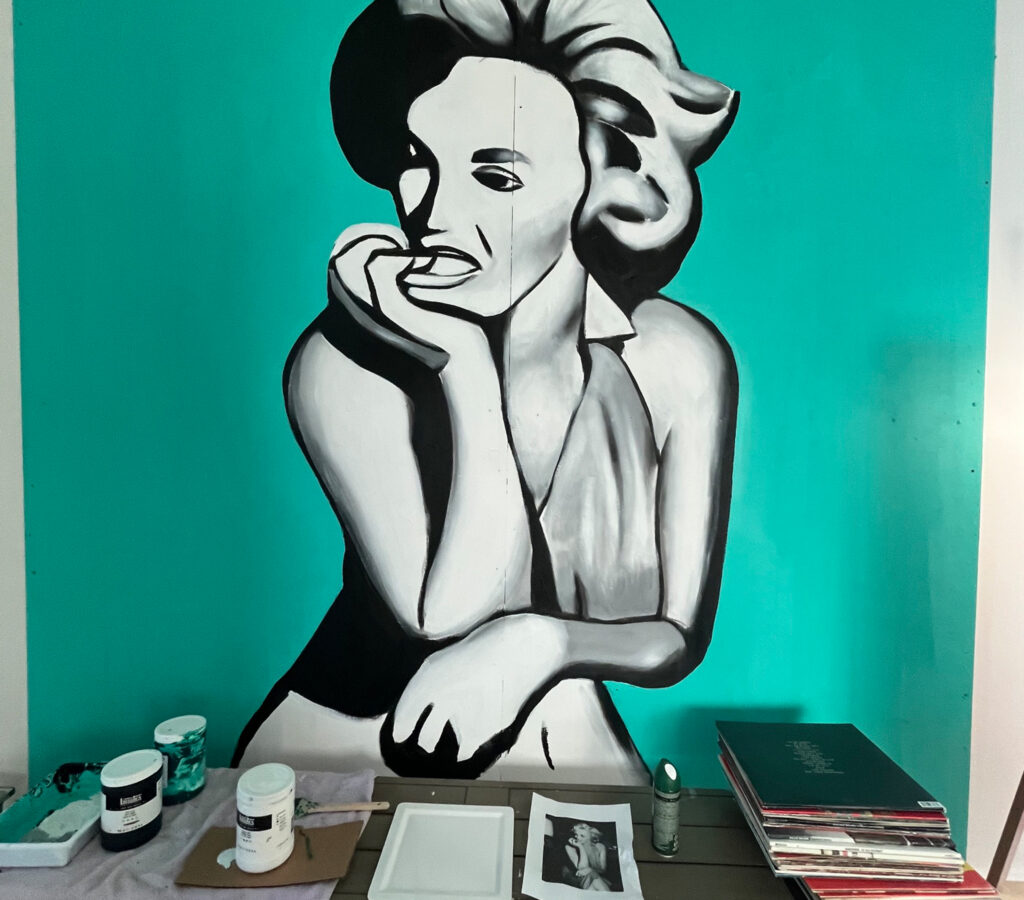
That’s one of the things I enjoy most about large-scale work.
My background in painting and design often overlaps in projects like this. The same ideas I use in environmental graphics and public art—scale, contrast, placement and relationship to the surrounding environment—become part of the painting process.
The finished piece becomes more than an object placed within the room.
It becomes part of the room.
More of my art and large-scale work:
petekirill.com

Comments
Shelby4341
September 11, 2026 at 7:02 amhttps://addlinks.pro/qsbWj
Londyn2139
September 13, 2026 at 3:39 amhttps://addlinks.pro/YyRel
Betty4706
September 13, 2026 at 8:08 pmhttps://addlinks.pro/nbZXu
Ally4204
September 13, 2026 at 8:34 pmhttps://addlinks.pro/qrGVz