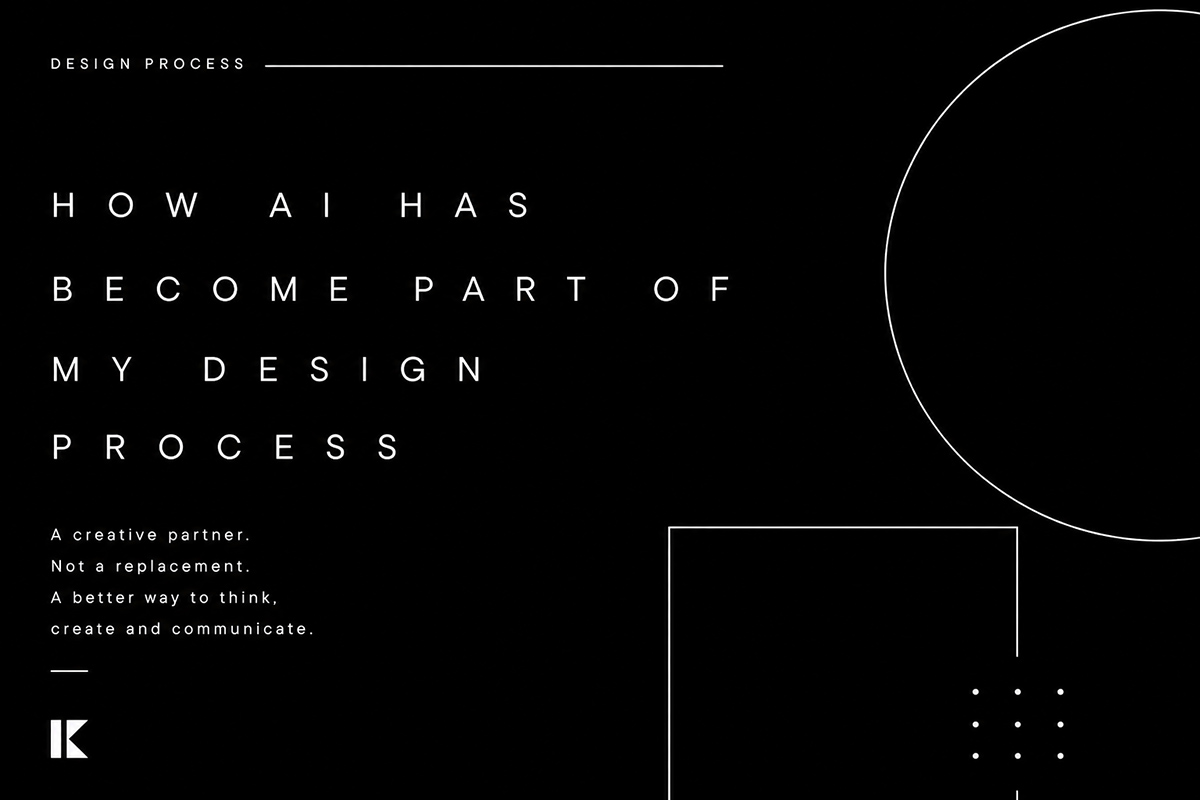
How AI Has Become Part of My Design Process
- by Kirill
- in AI Workflows
- posted July 29, 2026
Like many designers, I was skeptical about AI at first. I didn’t want it designing for me—I wanted it helping me think better.
Over the past year, ChatGPT has become another tool in my creative process. I use it to brainstorm concepts, challenge ideas, refine messaging, and improve the way I present my work. Sometimes it’s like having a copywriter on call. Other times, it’s like having a creative partner who’s willing to question my assumptions and push an idea further.
One of the biggest ways AI has changed my workflow is in presentations. Whether I’m developing a brand identity, designing a website proposal, or building a client deck, it helps me articulate the strategy behind the work—not just the visuals. Explaining why a design works is just as important as showing what it looks like.
I also use AI to research industries, organize information, write portfolio case studies, and overcome the occasional creative block. Instead of staring at a blank page, I can explore different directions quickly and spend more time refining the ideas that matter.
That doesn’t mean AI is doing the design.
Every concept, layout, and creative decision still comes from experience, intuition, and years of solving visual communication problems. AI simply helps me iterate faster, communicate more clearly, and focus on creating stronger work.
Like Photoshop, Illustrator, and Figma before it, AI has become another tool in my toolbox. It doesn’t replace creativity—it expands what’s possible.

Comments
Eva3118
July 29, 2026 at 1:02 pmhttps://shorturl.fm/SG7aD
Leon2017
July 30, 2026 at 8:58 amhttps://shorturl.fm/slm3l
Brielle2802
July 31, 2026 at 2:19 pmhttps://shorturl.fm/5XKxB
Caitlin1075
August 1, 2026 at 7:21 amhttps://shorturl.fm/ASgeU
Norman2437
August 1, 2026 at 10:40 pmhttps://shorturl.fm/0j7Ml